

A soft ice cream machine is a continuous freezing system that turns a liquid mix into stable, aerated soft serve at a controlled temperature and viscosity. Instead of freezing the mix solid and then scooping it, the machine chills the mix inside a refrigerated cylinder, scrapes frozen layers into the flow, and dispenses a smooth product that holds its shape for service. Understanding the internal cycle helps buyers choose the right configuration, operate it correctly, and maintain consistent output in high-traffic environments.
For businesses that need predictable performance and long service life, choosing a supplier with dedicated refrigeration-equipment manufacturing experience, export support, and responsive technical service is a practical advantage. PRO-TAYLOR focuses on soft serve and related frozen beverage equipment, supports customization, and provides quality assurance and after-sales support for international customers.
To review available options, see PRO-TAYLOR’s soft ice cream machine.
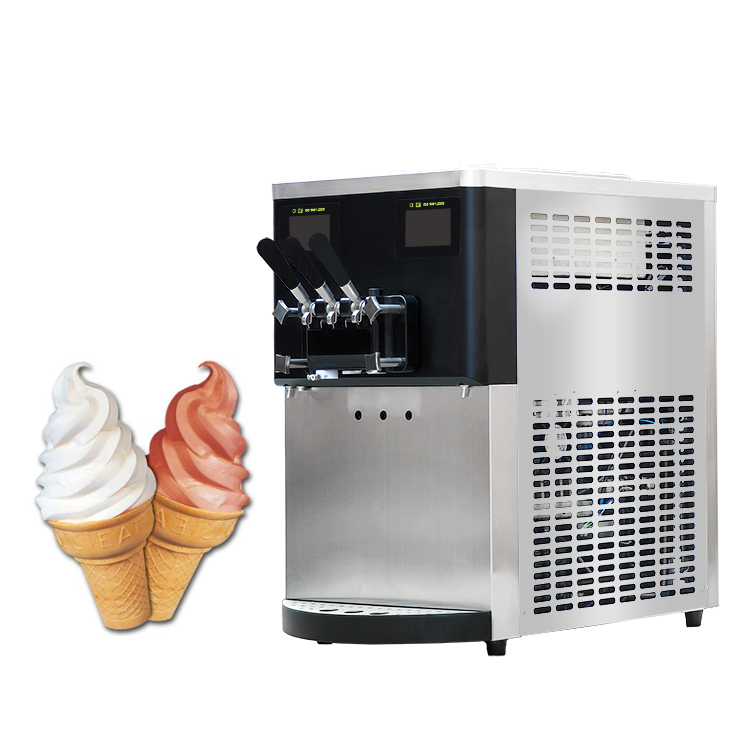
The Core System: Refrigeration + Freezing Cylinder + Dasher
A soft ice cream machine works by combining three actions inside the freezing cylinder:
- Refrigeration removes heat from the mix through an evaporator system, lowering temperature until part of the water content freezes into micro ice crystals.
- A rotating dasher mixes and scrapes. As the cylinder wall gets cold, the mix touching it begins to freeze first. The scraper blades continuously remove this frozen layer and fold it into the product stream. This prevents thick ice sheets and keeps texture fine.
- Controlled aeration builds overrun. Air is introduced in a regulated way so the product becomes lighter and smoother. The amount of air affects mouthfeel, appearance, and portion economics, and it must be stable to avoid shrinkage or weak structure.
This cycle repeats continuously during operation, producing a steady flow that can be dispensed on demand.
Step-by-Step: What Happens From Mix to Dispense
1) Mix storage and pre-cooling
In most commercial setups, liquid mix is stored in a hopper. Pre-cooling keeps mix within a safer temperature range and reduces load on the freezing cylinder during peak hours. In practical terms, stable pre-cooling improves consistency from the first serving to the last serving during a rush.
2) Feed into the freezing cylinder
The machine meters mix from the hopper into the freezing cylinder. As product is drawn, more mix enters to replace it. This is why soft serve production is often described as continuous: the cylinder is always balancing new mix input with frozen product output.
3) Freezing and micro-crystal formation
The refrigeration system pulls heat out of the cylinder wall. The goal is not to freeze everything solid, but to form a high density of small ice crystals. Smaller crystals create a smoother texture, while large crystals cause graininess.
4) Scraping and blending for texture
The dasher rotates to keep the semi-frozen mix moving while scraper blades remove frozen film from the cylinder wall. This mechanical action is essential because it keeps heat transfer efficient and prevents ice buildup that would choke the cylinder.
5) Aeration for structure and yield
Air enters the product stream in a controlled manner. Overrun levels vary by recipe and market preference, but the principle stays the same: consistent aeration gives stable spirals, clean edges, and predictable portioning.
6) Viscosity control and dispensing
Sensors and control logic maintain a target viscosity or temperature window so the product dispenses smoothly without turning watery or overly stiff. When operators pull the handle, the machine releases product that is cold enough to hold shape but soft enough to flow.
Key Components and Their Roles
A buyer evaluating machines should understand which components drive performance and service reliability:
- Compressor: the engine of the refrigeration system; stability here affects freezing speed and recovery time during peak service.
- Condenser: rejects heat to the environment; airflow and cleanliness directly influence efficiency.
- Evaporator/cooling circuit: transfers cooling into the cylinder; consistent heat exchange supports uniform product texture.
- Freezing cylinder: where the product forms; cylinder surface condition influences scraping efficiency.
- Dasher and scraper blades: control texture by preventing ice plates and maintaining fine crystal distribution.
- Air system: sets and stabilizes overrun; poor air control often shows up as weak structure and fast melt.
- Control board and sensors: manage viscosity/temperature targets and reduce operator variability.
PRO-TAYLOR’s product development and service team supports customers in selecting configurations and operating parameters aligned with their menu, climate, and service volume.
How Overrun Affects Product Quality and Operating Cost
Overrun is the percentage of air incorporated into the soft serve. Higher overrun increases volume yield per liter of mix, but too much air can create a foam-like texture and weak structure. Lower overrun creates a denser product with stronger dairy body, but yield is reduced.
For operators, the practical goal is not maximum air, but stable air. If a machine cannot regulate aeration consistently, operators may see periodic softness, shrinkage after dispensing, or uneven texture from one serving to the next.
Single Flavor vs Twist: What Changes Internally
Soft ice cream machines are commonly configured as:
- Single flavor: one hopper and one freezing system
- Dual flavor: two independent sides
- Twist: combines two sides to create a mixed option at the dispensing head
From a working principle standpoint, a twist machine is essentially two freezing systems sharing a dispensing interface. For buyers, the selection should be driven by menu strategy and traffic patterns. Dual/twist expands product variety and upsell potential, but also increases cleaning and operational discipline requirements.
Common Soft Serve Problems and What They Usually Mean
Soft serve quality issues often reflect a mismatch between mix settings, machine condition, and operating practice:
- Too soft or dripping: viscosity setpoint too low, insufficient freezing capacity, warm mix input, or high ambient heat affecting the condenser.
- Too hard or slow to dispense: viscosity setpoint too high, low overrun, or restricted mix feed.
- Icy or grainy texture: poor scraping performance, unstable freezing cycle, or mix formulation issues.
- Air bubbles or weak structure: unstable air regulation, improper priming, or worn air components.
- Inconsistent output during rush hours: recovery limitations, condenser airflow issues, or improper pre-cooling.
A supplier that can provide technical checks, process guidance, and replacement support helps operators reduce downtime and stabilize product quality. PRO-TAYLOR maintains QA and after-sales service capabilities to support those practical needs.
Quick Reference Table: System Functions and Buyer Checks
| System Area | What It Does | What To Check During Evaluation |
|---|---|---|
| Refrigeration loop | Removes heat to freeze the mix | Cooling stability, recovery performance, condenser design suitability |
| Freezing cylinder | Forms semi-frozen product body | Build quality, surface condition, ease of cleaning access |
| Dasher & scraper | Prevents ice plates and builds smooth texture | Scraping efficiency, durability, replacement convenience |
| Air control | Sets overrun and structure | Consistency across servings, ease of adjustment, stability |
| Controls & sensors | Maintains viscosity/temperature window | Accuracy, reliability, operator-friendly settings |
| Serviceability | Keeps uptime high | Parts support, troubleshooting response, documentation clarity |
Conclusion
A soft ice cream machine works by continuously freezing liquid mix inside a chilled cylinder while a rotating dasher scrapes and blends micro ice crystals into a smooth, aerated soft serve. Consistent refrigeration, stable air control, and reliable viscosity management are what separate predictable commercial output from inconsistent results. For buyers, selecting a machine is also a supply decision: dependable manufacturing experience, customization support, and after-sales readiness reduce operating risk.
If you are sourcing for a retail shop, distributor program, or equipment project, PRO-TAYLOR’s soft ice cream machine lineup is designed for commercial use cases, with customization options and international support available through consultation.